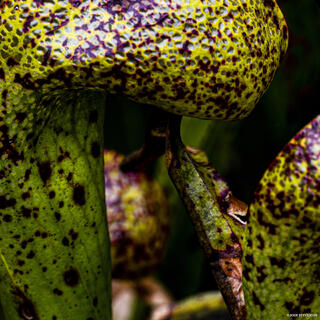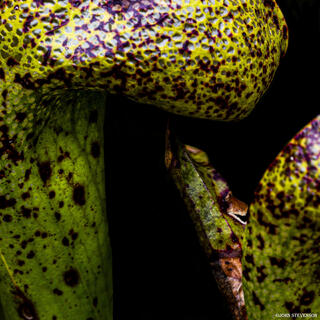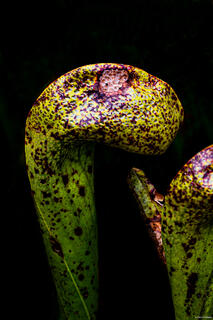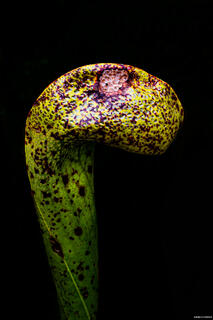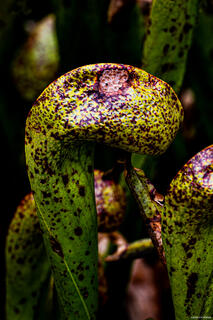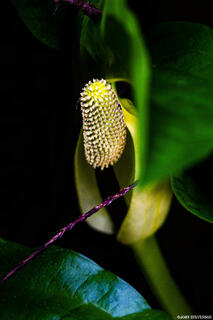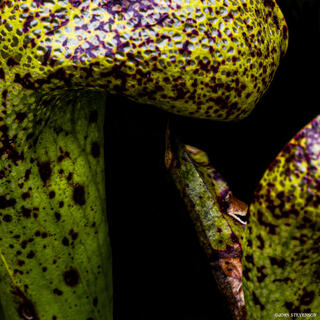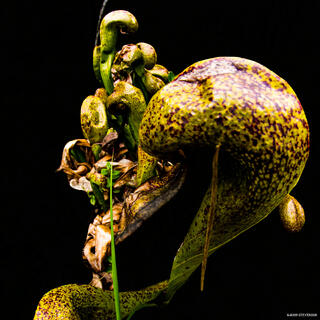
"Back in Black" is the cool title of this gallery. You might ask why? We went to this protected site at Darlingtonia State Natural Site near Florence, close to the Oregon Coast. The original photos I took you can see in another gallery on this website, but in these I went into Photoshop and blackened the background for the Cobra plant to stand out. They protect in a fascinating wetland habitat filled with the unusual cobra lily, also known as Darlingtonia californica. This rare carnivorous plant is named for its distinctive appearance, with tubular leaves that resemble a cobra rising from the ground. The protected site provides visitors with an opportunity to see these remarkable plants growing naturally in their cool, wet environment.
Cobra lilies have adapted to survive in habitats where nutrients in the soil can be limited. Instead of relying entirely on the ground for nutrients, they supplement their needs by capturing insects. The plant’s tubular leaves create a deceptive trap. Flies and other small insects are attracted toward the opening, where translucent areas and nectar can encourage them to move inside.
Once an insect enters the tube, the smooth, slippery interior and downward-pointing structures make escaping difficult. The insect becomes trapped inside the plant, eventually dying. Cobra lilies then obtain nutrients from the captured insects as they break down within the specialized leaf structure.
Because the plants are part of a protected natural site, visitors should observe them without touching, picking, or disturbing them or their habitat. Staying on designated paths helps protect the delicate wetland environment.
Darlingtonia State Natural Site offers a rare glimpse into the fascinating world of carnivorous plants while highlighting the importance of preserving Oregon’s unique coastal ecosystems.