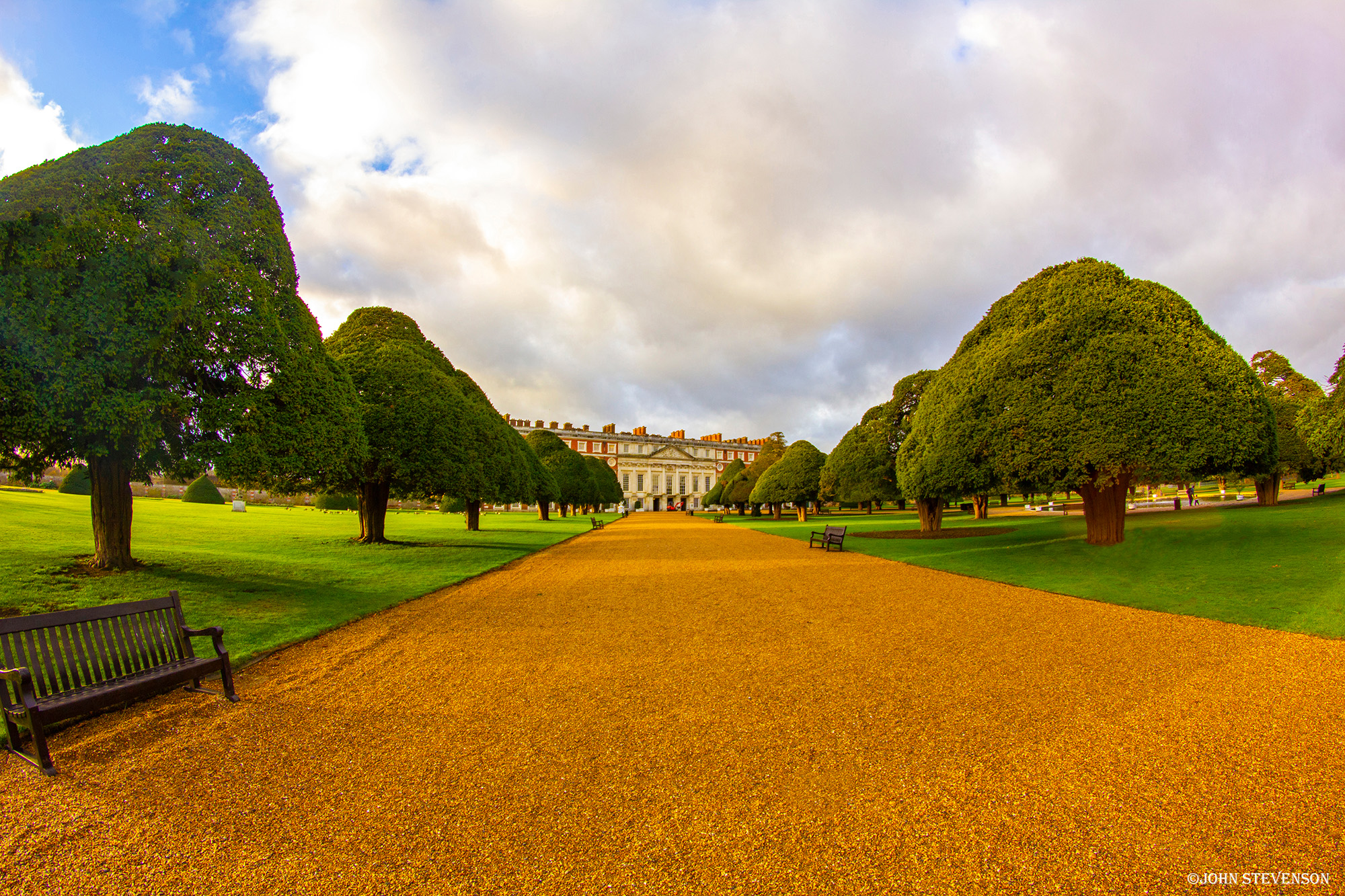
Hampton Court Palace is one of England’s most fascinating historic royal residences, combining magnificent architecture, beautiful gardens, and centuries of royal history. Located beside the River Thames southwest of central London, the palace offers visitors an opportunity to step into a setting shaped by Tudor and later royal traditions. I like the view of the garden to the historic building of Hampton Court Palace London.
The palace is closely associated with King Henry VIII, who expanded Hampton Court during the sixteenth century and made it one of his most important residences. Its grand courtyards, impressive towers, chimneys, and richly decorated interiors reflect the wealth and ambition of the Tudor period. As visitors move through the palace, they encounter historic kitchens, royal apartments, ceremonial spaces, and remarkable architectural details that reveal how the royal household once lived and worked.
Beyond the palace buildings are extensive gardens that provide a peaceful contrast to the grandeur of the royal interiors. The grounds include formal gardens, carefully designed flower beds, broad lawns, ornamental features, and tree-lined paths. Each season brings a different character to the landscape. Spring introduces fresh flowers and greenery, while summer brings vibrant displays and beautifully maintained gardens. Autumn adds warm colors and a quieter atmosphere.
One of the most famous features is the Hampton Court Palace gardens, including the formal gardens associated with the palace’s royal history. Visitors can also explore the celebrated Hampton Court Maze, where winding paths create an entertaining challenge within the historic grounds.
Walking through the gardens offers wonderful views back toward the palace, allowing visitors to appreciate the relationship between the architecture and surrounding landscape. The combination of stone buildings, green lawns, flowers, trees, and pathways creates a setting that feels both grand and peaceful.
Hampton Court Palace is more than a historic building. Its gardens and architecture together tell a story of changing royal tastes, English history, and the evolution of one of Britain’s most remarkable royal estates. A visit provides an opportunity to enjoy both the beauty of the gardens and the enduring character of the palace. Photo © copyright by John Stevenson.