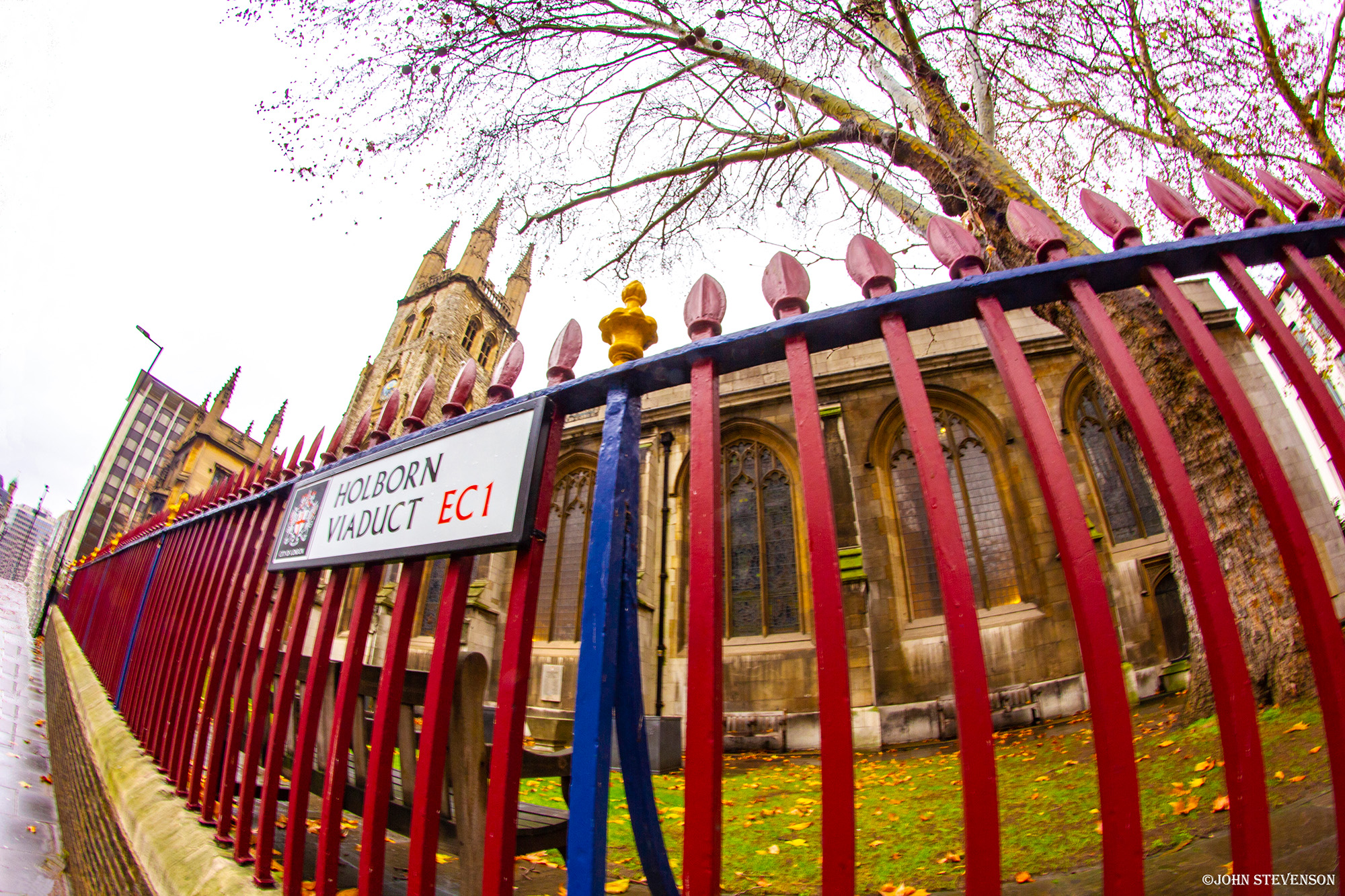
On the main road to the historic Holborn Viaduct bridge, I photographed this cool metal fence with the church in the background. I went back to England because my mother had pancreatic cancer just before Christmas, I had a great trip, seeing her, but she died in the New Year, I think she was waiting to see me as I had not seen her for many years, I saw some of my friends who I knew from primary school, well 45-50 years ago.
Holborn Viaduct is a historic bridge and roadway in central London, connecting the area around Holborn with the City of London. Built in the nineteenth century, it was an important part of London’s expanding transportation network and became one of the city’s notable examples of Victorian engineering and architecture.
The viaduct crosses the valley formed by the River Fleet, a waterway that once flowed through this part of London before being covered and incorporated into the city’s underground drainage system. When Holborn Viaduct opened in 1869, it helped create a more direct route between Holborn and the City, improving movement for pedestrians, horse-drawn vehicles, and commercial traffic.
Today, Holborn Viaduct remains a busy urban thoroughfare surrounded by a fascinating mixture of historic and modern architecture. Ornate stonework, decorative sculptures, and Victorian details can be seen alongside contemporary offices and buildings. The area provides a glimpse into how London has evolved while retaining visible reminders of its nineteenth-century past.
Nearby streets lead toward some of central London’s most historic locations, including St. Paul’s Cathedral, Smithfield, and the City’s financial district. Walking across the viaduct provides an opportunity to appreciate both its engineering significance and its place within London’s changing cityscape.
Holborn Viaduct is therefore more than a bridge: it is a lasting reminder of Victorian London and an important part of the city’s architectural and transportation history. Photo © copyright by John Stevenson.